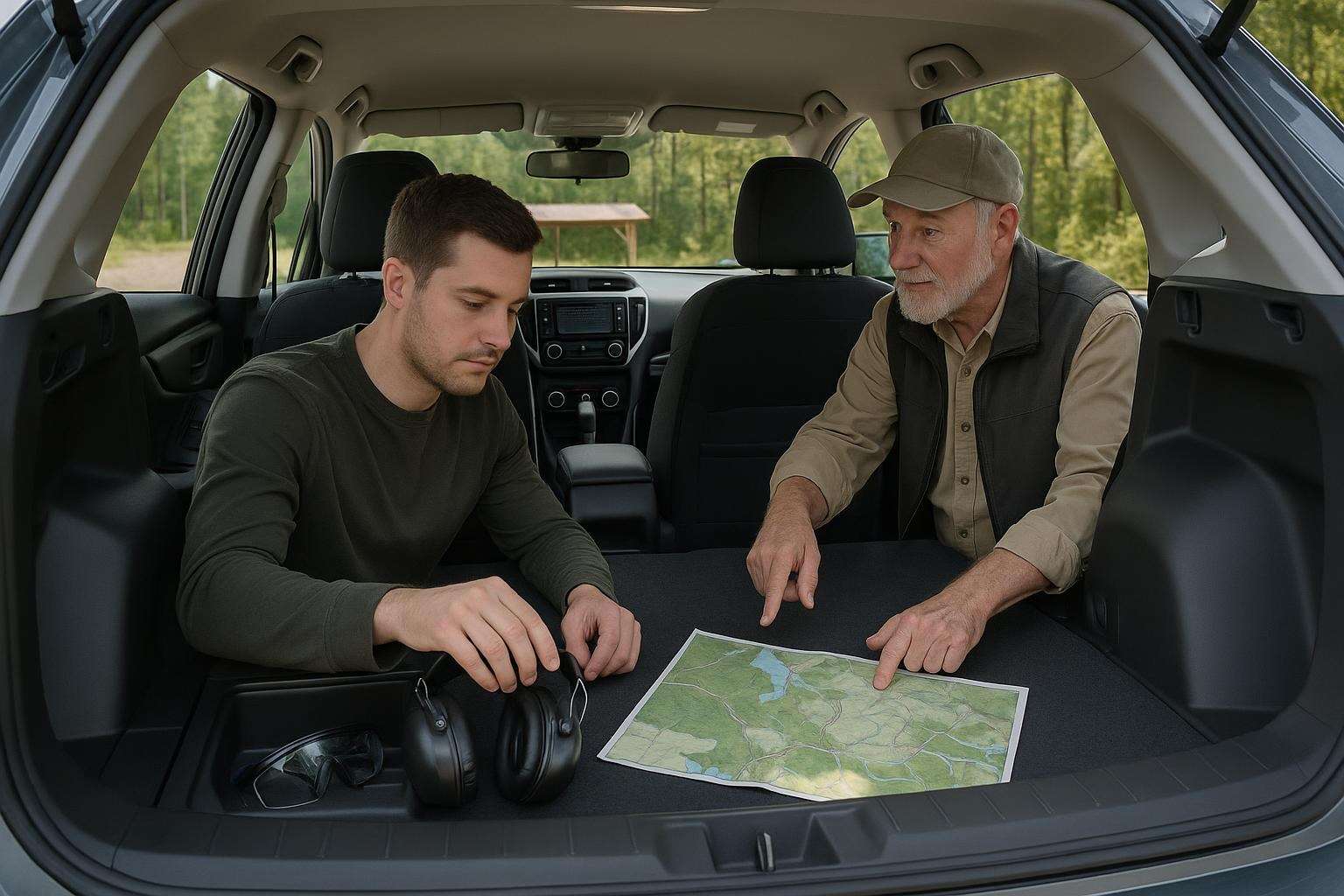
Choose the club visit before you choose the trip. You have a free Saturday, a planned hike or camping weekend, and a practical question: will an orientation at a nearby shooting sports club help you build useful habits, or simply add another commitment? The answer depends less on impressive facilities than on how clearly the club explains safety, welcomes questions, supports training and helps members follow current local rules. A good first visit should leave you better prepared to decide whether the club belongs in your regular outdoor routine.
Start with the purpose of your first visit
Use one ordinary plan as your test case. Suppose you are preparing for a day outdoors where navigation, weather awareness and general hiking safety matter, and you are considering a community range as one part of your training. You do not need a fixed identity or an immediate membership decision. You need enough information to judge whether the club's culture matches your learning needs.
Before attending, ask what the orientation covers. A useful introduction should explain check-in, range commands, protective equipment, waiting areas, supervision, emergency procedures and expected conduct. It should also clarify which activities require an instructor or separate qualification. If the answers are vague, rushed or framed as knowledge you should learn by watching others, pause before participating.
The best first question is not, "How quickly can I participate?" It is, "What do I need to understand before I participate?" That keeps the visit focused on judgment rather than novelty.
Read the culture before reading the calendar
A welcoming club is not necessarily loud or informal. It is a place where experienced members can explain procedures without making newcomers feel foolish, and where safety corrections are clear without becoming personal. Staff or volunteers should be willing to say when a question requires a qualified instructor or an official source.
Watch how people handle small moments. Are visitors told where to stand and when to move? Do members wait for instructions instead of guessing? Does someone explain a rule before correcting a mistake? These details reveal more about range culture than a friendly greeting alone.
Your scenario provides a useful filter. If your goal is steady outdoor training before a trip, you need a club that values repetition, attention and responsible pacing. A setting that treats every visit as a contest for speed or status may not support the habits you want. Ask about beginner sessions, supervised practice, coaching style and how members continue learning after orientation.
Also ask about the social side. Some clubs are built around scheduled instruction; others rely heavily on informal member interaction. Neither model is automatically better. The practical question is whether you can find a clear path from first visit to safe, regular participation.
Treat training as a routine, not a one-time hurdle
Orientation gives you a map; it does not replace practice. After the first visit, choose a modest routine you can maintain alongside hiking, walking or other outdoor activities. Regular practice should reinforce calm decision-making: checking equipment before use, reviewing the day's rules, listening for instructions and stopping when something is unclear.
Ask how progress is measured without turning the club into a performance test. A sound plan may involve repeating basic procedures under supervision, receiving feedback and handling more complex situations only when an instructor considers that appropriate. Do not assume confidence means readiness. Familiarity can make people less attentive unless it is paired with deliberate checks.
For the trip in our example, separate skills that belong together from those that do not. Range training can support concentration, safe handling habits and respect for controlled environments. It does not automatically teach route planning, weather assessment, first aid, wildlife awareness or emergency communication. Hiking safety still requires its own preparation, and a club should not be presented as a substitute for it.
A useful sign of mature instruction is a clear boundary around what the session cannot cover. Responsible trainers do not promise that one orientation prepares someone for every outdoor situation.
Verify rules before each change of plan
Local outdoor regulations can affect where, when and how an activity is permitted. Requirements may come from a club, land manager, municipality, state or national authority, and they may change. Do not rely on an old message, a friend's memory or a social media comment when plans involve transport, storage, access, seasonal restrictions, required supervision or activity on public land.
For the scenario above, verify three separate things: the club's current operating rules, the destination's rules and any requirements connected with the equipment or activity. Ask the club where to find its latest procedures, then check the relevant official government or land-management guidance yourself. If sources appear to conflict, delay the plan until the responsible authority resolves the difference.
Members who routinely check notices, closures and updates are less likely to carry assumptions from one location into another. Confirm the rules again whenever the trip, venue or activity changes.
Use one short check before committing
After your first conversation or orientation, write down the answers rather than relying on a general impression:
– Is there a clearly explained safety orientation before participation?
– Can a new member ask questions without being dismissed or pressured?
– Are supervision, protective equipment and emergency procedures explained?
– Is there a realistic route from orientation to regular training?
– Can the club point you toward current official rules and updates?
– Does its culture fit the pace and purpose of your outdoor plans?
If several answers are unclear, visit another club or postpone joining. That is not excessive caution; it is useful information about fit.
A local club should make responsible participation easier to understand, not make uncertainty feel embarrassing. For someone planning a first trip, the right decision may be to attend an orientation, ask careful questions and leave without committing. If the procedures are clear, the culture is respectful and the rules are verified, returning for consistent training becomes a considered choice rather than a guess.